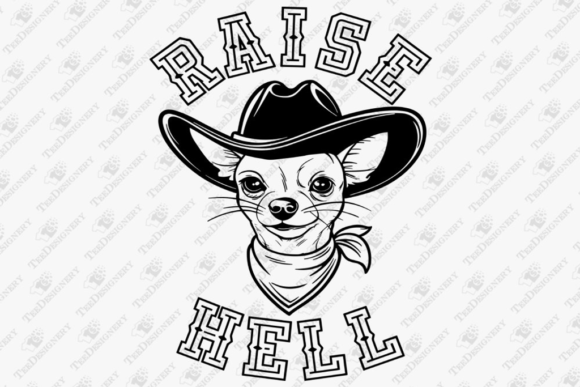
Raise Hell Cowboy Chihuahua Funny SVG Review
Performance in Real Embroidery Projects
Custom Sweatshirts and T-Shirts: On medium-weight cotton or blends, this design holds up beautifully. The lines are crisp, and the stitch density seems appropriate for most standard machines. If you’re using satin stitch for the outline and fill stitch for the main body, the result is sharp and colorful. However, because of the detail in the character and the lettering, it’s important to review the stitch count and adjust tension accordingly.
Tote Bag Designs: For tote bags made of quilting cotton or similar materials, the design looks great. The scale is suitable for larger hooping areas, so it doesn’t get compressed or lose definition. That said, if you're working with stretchy or thin fabric, you’ll need to take extra care with stabilizer choice to avoid puckering or distortion.
Baby Embroidery: The chihuahua itself is cute enough for a baby item, but the “Raise Hell” wording might not be ideal for all parents. You’ll want to consider your target audience here. Maybe offer a version with softer language for baby clothes or nursery decor. Still, the image alone could work on a onesie or a blanket, especially if you scale it down and simplify the stitching slightly.
Patches and Decorative Items: This SVG is also a solid candidate for embroidered patches or aprons. The structure allows for clear separation of elements, making it easier to stitch individual parts separately if needed. For curved surfaces like caps or hats, though, the corners and angles may require some manual tweaking to maintain clarity after cutting and appliqueing.
Where Caution Is Needed
- Small Hoop Sizes: The design is relatively large, so if you're working with limited hoop space, you may have to scale it down. Be aware that reducing the size could affect the visibility of the smaller details, like facial features or tiny lettering.
- Textured or Stretchy Fabrics: These can distort the design during stitching. Use a proper stabilizer and test on scrap fabric to see how it holds up.
- Dark Fabric Backgrounds: Thread color contrast becomes critical. The design comes with suggested thread colors, but you’ll want to double-check those against your intended fabric to ensure visibility.
- Frequent Wash Use: Dense stitch areas may cause pilling or loosening over time. Recommend a high-quality thread and reinforce delicate spots for longevity.
Practical Designer Notes
- Test on Scrap Fabric: Especially if you're planning to use it on textured or stretchy materials. See how the stitch density interacts with the fabric texture.
- Review Thread Color Contrast: Make sure the colors pop against your chosen background. Consider creating a black and white mockup to evaluate how it might look without color.
- Check Stitch Density: High-density areas may need thinning or reinforcement depending on the fabric and machine being used.
- Confirm Hoop Size Requirements: Since exact hoop sizes aren't provided, test different sizes to find the best fit for your machine and project.
- Inspect Small Details: Look closely at the facial expressions and lettering to ensure they won’t become lost in scaling or stitching.
- Use Proper Stabilizer: Especially important for lighter or stretchier fabrics. Tear-away or cut-away stabilizers may be necessary for optimal results.
- Verify Licensing Before Selling: If you plan to sell finished products or digital embroidery files, make sure the licensing allows for commercial use. This will save you from potential legal issues later.